
Stand Up For Life

Over the weekend I watched the one hour telethon for Stand Up To Cancer. The stories and music touch the hearts and souls of everyone watching, pledging, and standing up to cancer–any and all. One person. It takes only one to get the idea to stand up as one to support a cause.

If one person after one person stood up for every cause, you’d have a domino effect. Then every cause would receive recognition and create awareness worldwide.

9115749b9d6d6abf5b60cb057ab4010e

All this week and everyday, I stand up for suicide prevention. This week has been designated to National Suicide Prevention Week. On Friday, the American Foundation for Suicide Prevention (AFSP) asks you to wear your AFSP, Out of the Darkness Walks, or Sevenly shirt(s) and take a selfie to stand up to suicide prevention. Just take a photo and post it to Twitter and/or Instagram with hashtag #selfiesagainststigma!

Stigma still surrounds suicide and it’s past time that this barrier got broken. The more people become educated on suicide prevention and understand that suicide occurs for many reasons with the main underlying reason being mental illness, the more lives can be saved. Do your part and STAND UP to preventing suicide.
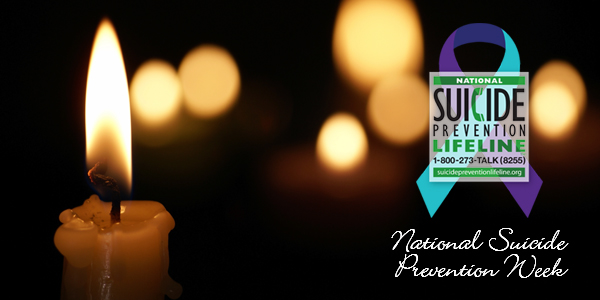
600x300NatSuicidePreventinoWeek

Re-living a tragedy

“As the world grieves, may more light be shed upon mental illness and the prevention and education of suicide”. -K.E.Voss

It’s been over a week since the world learned of the passing of Robin Williams. Since then we have learned the cause of his death by suicide — he hung himself and had attempted to slit his wrists. I apologize for my bluntness, but it’s not something to hide behind, it’s truth. We also know he had the beginning stages of Parkinson’s Disease, which may have caused his depression or added to it.

There’s so many questions and there may never be answers. He may not even know.

I do know, like many people who have lost someone to the completion of suicide, may have been affected by Robin’s death; I know I have. When I heard the details of how he died, I had an immediate flashback to the moment I found my husband. It sent a wave of emotions into me. Your breath is a powerful tool to calm the mind down. I had a visit scheduled to my chiropractor who doesn’t just assist with physical ailments. Talking about it and getting adjusted, which helped my emotional and mental health as well as physical, made for a better night. Seeking support from friends geared thoughts to other things. This created only a bump in the road for me that became smoother.

Others affected may not have had it as simple as I did. Reliving tragedies isn’t fun especially if you still have fresh wounds. Depending on what you witnessed, it takes a good amount of time to heal and even then the memories can resurface.

Death opens wounds for those affected by suicide

Remember to call upon and check on those who maybe re-affected by worldly or local/national tragedies. Show you care. Be there.

Don’t be quick to judge

A recent Dear Abby post (from Tuesday, August 5, 2014) reminded me of something I wrote in That’s All I Got. The lady who wrote to Dear Abby mentioned that no one outside her immediate family knew she suffered from depression or a suicide attempt.

When Russ and I were dating and then married, we never shared the information about Russ’ mental illnesses with anyone in my family. We wanted Russ treated without judgement, as a regular person and not someone seen as a victim or a special case. This was our mutual decision.

After Russ died and the details started to emerge, I heard or maybe asked about why we didn’t tell and that maybe they could have helped. My first thought was: How? Can you take the illnesses away? When I gave the reason behind not telling, I heard, we wouldn’t have done that (meaning judged him based on him having bipolar disorder and auditory hallucinations). Really? It’s 2014, everyone is quick to judge. How many times have you heard about someone committing (completed is the correct term) suicide and thinking they’re crazy when in reality they suffered from a mental illness known or unknown to someone else. I used to do this myself until suicide affected me. Can you say the same? Do you want to?

Think about it. Don’t be quick to judge.

Overcoming

Ask anyone how they grieve and you’ll receive a different response every time. There’s no wrong or right way to mourn the loss of a loved one or friend. The best thing you can do revolves around taking time to grieve; some people don’t and that’s when moving forward turns into feeling stuck in wet cement or quicksand. It took me over two years to reach “acceptance” the final stage of the grieving process. With the proper support and grief/trauma counseling, I moved forward. I thrived.

In a recent episode of Extreme Weight Loss on ABC, the person whose life required transforming is the widow of an Army soldier who completed suicide as he dealt with PTSD (Post-Traumatic Stress Disorder) after a deployment to Afghanistan. Their adopted son deals with PTSD after his dad ended his life. This lady never took the time to grieve for her husband. She hid her pain and turned to food as a way of coping. While I don’t know first hand how to deal with PTSD from serving in the military, I do have an understanding of what PTSD is since I received treatment for it following my husbands completion of suicide. One does not treat PTSD on their own; treatment exists and one can recover from it under the proper care, but it does take time. While you reduce the trauma, symptoms can linger for years to come. There’s much information about PTSD and while I won’t approach it more on here, I’ll do so in another post.

I’ve included the link to the episode of Extreme Weight Loss I mentioned.

Extreme Weight Loss, Melissa’s Journey

My first borrow

A week ago, I discovered that That’s All I Got made the list of availability at three separate libraries. On Wednesday, July 2nd, I had a hunch to check the Milwaukee Public Library website and look at the book listing. Boom! There you go! The first borrow checked out of the Cudahy Family Library on what seems like the day before, Tuesday, July 1st (you can borrow a book for three weeks which is how I figured out the date from July 22nd.

I wonder…did someone spot it in the New Books area? Did they read about the library availability on Facebook. LinkedIn, or Twitter? Did someone wait until it had a home in the library to borrow the book instead of purchasing a copy? It doesn’t matter. What matters is that someone borrowed it to read and that person can share with someone else. What matters is that for some reason that book found a hand to hold; a journey of discovery that may help someone or inspire or even lead someone on their own journey of inspiration, peace, hope, or guidance. That’s what matters.

Suicide & Mental Health

A Chicago Fire episode (A Heavy Weight aired 4/15/14) touched on something that people deal with everyday, though often not talked about, the loss of someone to suicide. It’s not just portrayed for TV, it happens in real life. They touched on not seeing the signs, but there aren’t always signs shown; I know this from personal experience. The person referred to suffered from a mental illness, depression, which no one knew about except her family (so someone said). People can hide symptoms, to a point, and even those seeking treatment don’t always live well enough to win the battle of the mind.

How many people know that May is Mental Health Awareness Month?

I’m sharing information I received in an email from the Mental Health America of Wisconsin along with their resources for proper crediting. You can find the entire article by going to: Mental Health America of Wisconsin mental health month newsletter.

  • Key Statistics
    • Nearly 1-in-5 Americans over age 18 will experience a diagnosable mental health disorder in a given year (1), and nearly half will experience a mental health disorder in their lifetime (2).
    • Approximately 70% of Americans experience physical and non-physical symptoms of stress, but only 37% think they are doing very well at managing stress.(3)
    • More than 2/3 of American adults are either obese or overweight. (4)
    • One in six Americans over age 18 binge drink. Excessive drinking (binge drinking and heavy drinking) causes approximately 80,000 deaths each year.(5)
    • Nearly half (48%) of Americans report not getting enough sleep, with women feeling so more than men. (6)
    • While it is estimated that approximately half of US adults use supplements, only 23% of supplements used were recommended by a health care professional. (7)
    • Relationships and social connections are important.  Low level of social interaction was found to have an impact on lifespan equivalent to smoking nearly a pack of cigarettes a day or being an alcoholic, and was twice as harmful as being obese. (8)
    • Half of American adults do not get the recommended amounts of aerobic and muscle-strengthening exercise. (9)
  1. Substance Abuse and Mental Health Services Administration, Center for Behavioral Health Statistics and Quality. (February 28, 2014). The NSDUH Report: State Estimates of Adult Mental Illness from the 2011 and 2012 National Surveys on Drug Use and Health. Rockville, MD.
  2. Kessler RC, Berglund PA, Demler O, Jin R, Walters EE. Lifetime prevalence and age-of-onset distributions of DSM-IV disorders in the National Comorbidity Survey Replication (NCS-R).
  3. American Psychological Association. (2012) Impact of Stress. [Online] [Accessed on 27th March 2014] http://www.apa.org/news/press/releases/stress/2012/impact-report.pdf.
  4. Flegal KM, Carroll MD, Kit BK, Ogden CL. Prevalence of obesity and trends in the distribution of body mass index among US adults, 1999-2010.JAMA. 2012;307:491-7.
  5. http://www.cdc.gov/vitalsigns/BingeDrinking/index.html
  6. The Better Sleep Council. (April 2013) Survey: Americans know how to get better sleep-but don’t act on it. [Online] [Accessed on 27th March 2014] http://bettersleep.org/better-sleep/the-science-of-sleep/sleep-statistics-research/better-sleep-survey/
  7. Bailey RL, Gahche JJ, Miller PE, Thomas RP, Dwyer JT. Why US adults use dietary supplements. JAMA. 2013;173(5):355-61.
  8. Holt-Lunstad J, Smith TB, Layton JB (2010) Social Relationships and Mortality Risk: A Meta-analytic Review. PLoS Med 7(7): e1000316. doi:10.1371/journal.pmed.1000316
  9. Schoenborn CA, Adams PF, Peregoy JA. Health behaviors of adults: United States, 2008–2010. National Center for Health Statistics. Vital Health Statistics 10(257). 2013.

Break the stigma. Mental illness is for real. Suicide is for real. Become educated and talk about it. You might be that person who saves a life or reaches out for saving. Don’t be the one who asks, Why?